


 Date:2026.03.30
 Views: Loading


Understanding Battery Cycle Life: What Affects It and How to Maximize It
When comparing energy storage systems (ESS), most buyers focus on capacity — how many kilowatt-hours a battery can hold. But capacity only tells you what a battery can do today. Battery cycle life tells you how long it will keep doing it, and ultimately determines your true cost of ownership.This article breaks down what battery cycle life actually means, the five operational factors that shorten or extend it, and practical steps you can take to get the most out of your investment.
What Exactly Is a "Battery Cycle"?
A battery cycle is one complete charge and discharge of a battery's usable capacity. However, that does not always mean 0% to 100% and back. Two separate 50% discharges, for example, add up to one full cycle equivalent.There are two distinct types of aging every battery undergoes. Cycle aging is the wear caused by repeated charging and discharging. Calendar aging is the gradual capacity loss that occurs even when the battery sits idle, driven primarily by temperature and state of charge (SOC) during storage. ¹
The industry defines a battery's end-of-life (EoL) as the point when its capacity drops to 80% of the original rated value. A battery at 80% capacity is not dead — it still functions — but it has crossed below the threshold most manufacturers use for warranty and performance guarantees.
What Factors Determine How Long a Battery Lasts?
Five operational variables have the greatest impact on battery cycle life. Managing even a few of them can dramatically extend a battery's useful service period.1. Depth of Discharge (DoD)
DoD — the percentage of capacity used in each cycle — is the single most influential factor. Shallower discharges place less mechanical stress on the electrode structure, which directly translates to more total cycles.The relationship is non-linear. Research from the National Renewable Energy Laboratory (NREL) shows that restricting DoD to 70% can extend lifespan by up to 150% compared to full discharges. ² As a general reference across lithium iron phosphate (LFP) cells:
| DoD | Approximate Cycle Life (to 80% capacity) |
| 50% | 8,000–10,000+ cycles |
| 80% | 4,000–6,000 cycles |
| 100% | 2,500–4,000 cycles |
2. Temperature
The optimal operating window for most lithium-ion batteries is 15–35°C. High temperatures accelerate the growth of the solid electrolyte interphase (SEI) layer on the anode, permanently consuming active lithium. Testing on prismatic LFP cells showed capacity degradation of 5.2% over 310 cycles at 45°C, compared to 3.1% at 25°C under identical charge-discharge conditions. ³On the cold end, charging below 0°C can cause lithium plating — metallic lithium deposits on the anode surface that reduce capacity and create safety risks.
3. Charge and Discharge Rate (C-Rate)
C-rate measures current relative to battery capacity. A 1C rate for a 100 Ah cell means 100 A of current. Higher C-rates generate more internal heat and mechanical stress, accelerating degradation.Most stationary ESS applications operate at 0.25C–0.5C, well within the comfort zone for LFP cells. At these rates, C-rate has a relatively minor impact on cycle life compared to DoD and temperature.
4. SOC Window
Keeping a battery between 20% and 80% SOC — rather than cycling from 0% to 100% — reduces electrode stress at both voltage extremes. Storing batteries at full charge is particularly damaging: a fully charged cell degrades up to 15% faster per month compared to one stored at 50% SOC. ²5. Manufacturing Quality
Cell-level consistency matters. Variations in electrode coating thickness, electrolyte purity, and separator uniformity all affect how evenly lithium ions move during cycling. A well-calibrated Battery Management System (BMS) compensates for minor cell-to-cell differences through active balancing, overcharge protection, and thermal monitoring.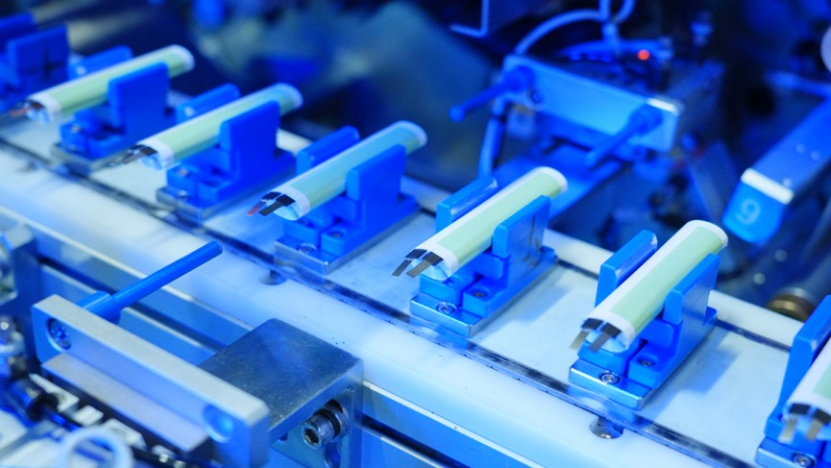
How Does Cycle Life Compare Across Battery Chemistries?
Not all batteries age at the same rate. The chemistry inside the cell sets the baseline for how many cycles it can deliver.| Chemistry | Typical Cycle Life (80% DoD, to 80% capacity) | Common Applications |
| LFP (LiFePO₄) | 4,000–10,000+ | Stationary ESS, solar storage |
| NMC (Nickel-Manganese-Cobalt) | 1,000–3,000 | EVs, portable electronics |
| Lead-acid | 300–500 | Legacy UPS, off-grid backup |
| Sodium-ion | ~3,000 (emerging data) | Cold-climate storage, cost-sensitive ESS |
Great Power's 590 Ultra energy storage cell pushes LFP performance further: 10,000+ cycles with a 25-year calendar life, enabled by micro-nano structural design and a self-healing SEI film. For cold-climate deployments, the POLAR series charges at temperatures as low as −30°C with over 95% charge-discharge efficiency, addressing one of the most common causes of premature battery degradation.
How Can You Maximize Battery Cycle Life in Practice?
Extending cycle life does not require exotic technology. It requires disciplined system design and operation.Manage DoD conservatively.
For daily-cycling ESS applications, targeting 80% DoD rather than 100% can nearly double total cycle count. The trade-off is a slightly smaller usable capacity per cycle, but the long-term economics strongly favor the shallower approach.
Maintain thermal control.
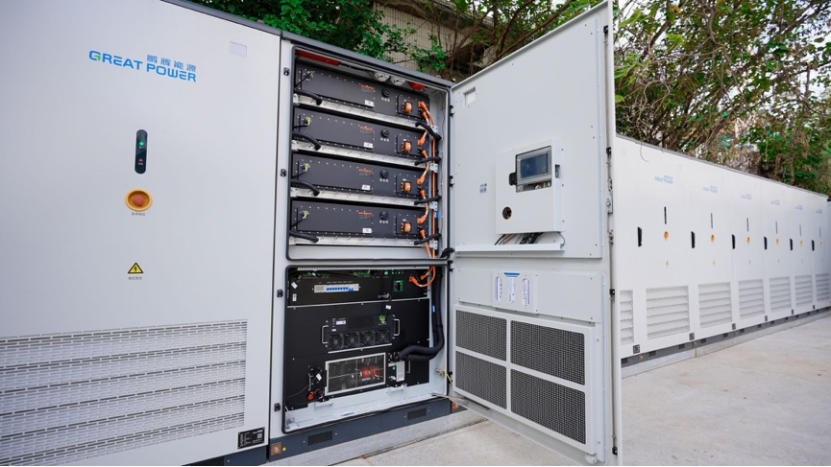
Liquid cooling systems that hold cell-to-cell temperature variation within 2°C can extend operational life by up to 30% compared to air-cooled alternatives. Great Power's Magna-UTL liquid-cooled system achieves this level of thermal precision across utility-scale installations.
Use a quality BMS.
Active cell balancing, real-time voltage monitoring, and configurable SOC windows are baseline features — not premium add-ons. The BMS should enforce safe operating boundaries automatically, regardless of how the system is dispatched.
Store idle batteries at 40–60% SOC.
If a system will sit unused for extended periods, a mid-range SOC minimizes both SEI growth (which accelerates at high SOC) and copper dissolution (which occurs at very low SOC).
The Bottom Line
Capacity tells you the size of the tank. Cycle life tells you how many times you can fill it. For any ESS project evaluated over a 10- to 25-year horizon, cost per cycle — not upfront price per kilowatt-hour — is the metric that determines real return on investment.LFP chemistry leads the field for stationary storage longevity, and operational discipline around DoD, temperature, and SOC window can push that advantage even further. When selecting a battery partner, ask for verified cycle life data at realistic DoD levels, and look for integrated thermal management that protects those numbers in the field — not just in the lab.
References
1. Yang, Zhihao, et al. "Study on Influencing Factors of Calendar Aging and Cycle Aging of LFP Batteries." Applied Sciences, vol. 15, no. 23, 2025, p. 12749. doi.org/10.3390/app152312749.
2. Origotek. "Understanding Lithium Battery Cycle Life and Its Impact on Energy Storage." Origotek, 2025, www.origotek.com/understanding-lithium-battery-cycle-life-and-its-impact-on-energy-storage.
3. Gowda, Anand S., et al. "Life Cycle Testing and Reliability Analysis of Prismatic Lithium-Iron-Phosphate Cells." International Journal of Sustainable Energy, vol. 43, no. 1, 2024. doi.org/10.1080/14786451.2024.2337439.
4. "Comprehensive Review on Lithium-Ion Battery Lifetime Prediction and Aging Mechanism Analysis." Batteries, vol. 11, no. 4, 2025, p. 127. doi.org/10.3390/batteries11040127.
 Consulting & Services
 Great Power