


 Date:2026.07.02
 Views: Loading


Short-Duration vs Long-Duration ESS Batteries: How Capacity, C-Rate, and Cycle Life Must Differ
Every grid-scale battery storage project starts with one ratio: duration, which is energy divided by power. A system that can run at full output for two hours is, by definition, a two-hour system. That number, more than the chemistry label, decides how the cell inside should be built.
The real difference in LDES vs SDES (long-duration vs short-duration energy storage) is not the chemistry on the datasheet. It is how capacity, C-rate, and cycle life are tuned for the hours a system must cover. The U.S. Department of Energy (DOE) defines long-duration energy storage as 10 hours or more; the LDES Council sets it at 8 hours and up; short-duration lithium projects have clustered at 4 hours or less. Formal thresholds vary across studies and jurisdictions. Here is the engineering that separates them.
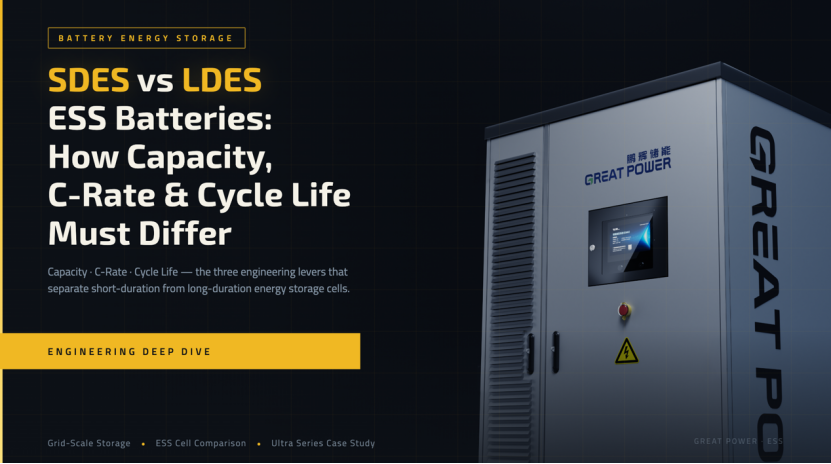
The Engineering Tradeoff: Three Levers That Separate SDES from LDES Cells
A lithium cell cannot maximize energy and power at the same time. The same electrode design that stores more energy moves it more slowly, and the design that delivers fast power holds less energy per cell. So a cell built for a one-hour frequency-regulation duty looks different from one built for a four-hour energy shift, even when both are lithium iron phosphate (LFP). Three levers do most of that tuning.
Capacity: Thin Electrodes for Power, Thick for Energy
Cell capacity, measured in amp-hours (Ah), tracks how much active material the electrodes hold. Higher-capacity cells use thicker electrodes that pack more energy per cell but accept and release it more slowly. Great Power's Ultra Series runs from a 280Ah cell up to a 648Ah cell. Fewer high-capacity cells cover a given energy target, which cuts cell count and connection points in a long-duration build. Lower-capacity, higher-power cells suit short-duration systems where fast response matters more than energy density.
How Does C-Rate Map to Duration?
C-rate, written here as P-rate (power relative to energy), sets how fast a cell charges or discharges, and it maps straight to duration. A 1P cell delivers its full energy in about one hour; a 0.5P cell takes about two. Great Power's 280Ah cell is rated 1P for fast response, while the 587Ah, 588Ah, and 648Ah cells are rated 0.5P for longer, gentler cycles. The 314Ah cell sits between them at 0.5P. Pushing a cell faster than its rating shortens its life, so the rated P-value is a design statement about the duration the cell is meant to serve.
Cycle Life and DoD: Cycle-Limited vs Calendar-Limited
Cycle-life figures only mean something alongside their depth of discharge (DoD), and the pair reveals the intended duty. Great Power's 1P 280Ah cell is rated for at least 6,000 cycles at 80% DoD; the 0.5P 587-to-648Ah cells reach 10,000 cycles at 70% DoD, with a 25-year design life under standard conditions. A short-duration system cycles many times a day and is cycle-limited, so it favors deep, high-throughput cycles. A long-duration system cycles less often and is calendar-limited, so it trades a shallower DoD for far more cycles and a longer calendar life.
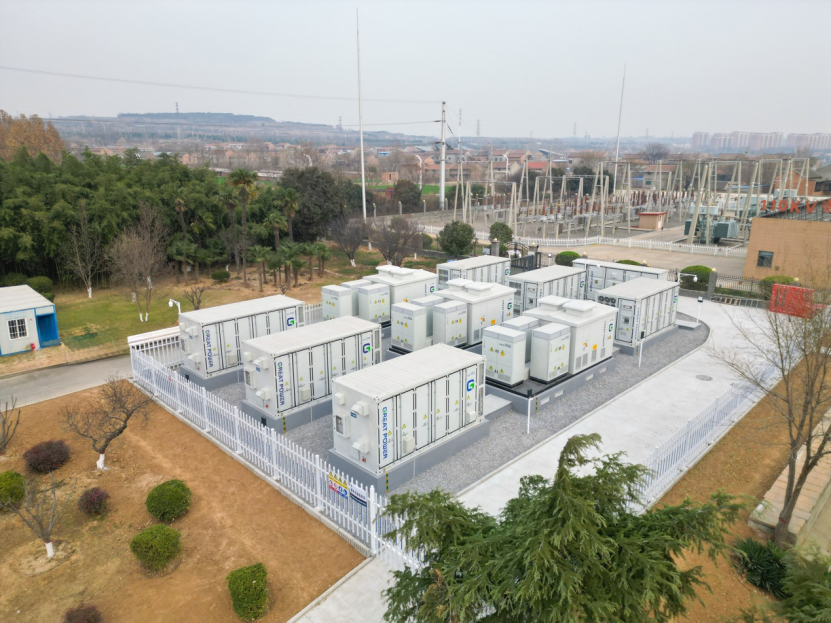
Case Study: The Ultra Series Cell Matrix
Great Power's Ultra Series shows the levers working inside one product family, because the cells share an LFP chemistry but are tuned for different durations. The matrix below reads as an ESS cell comparison along a single spectrum from power to energy.
Can One Cell Family Cover the Whole Spectrum?
Yes, by changing capacity, P-rate, and cycle rating rather than chemistry. Every Ultra Series cell is LFP, certified to UN38.3 and IEC62619, with GB (China's national standard) certification listed as in progress for the high-capacity models. The 280Ah and 314Ah cells target utility-scale and commercial and industrial (C&I) duty, while the 587Ah to 648Ah cells extend to utility-scale and residential energy storage. One supplier, one chemistry, several duration profiles.
The 314Ah cell is the bridge: a 0.5P energy cell at a moderate capacity, rated for 8,000 cycles at 70% DoD, for systems that need more than a power cell but less than the largest energy cells.
| Cell capacity | P-rate | Cycle life @ DoD | Charge temp | Application |
| 280 Ah | 1P | ≥6,000 @ 80% | 0–60 °C | Utility-scale, C&I |
| 314 Ah | 0.5P | ≥8,000 @ 70% | 0–60 °C | Utility-scale, C&I |
| 587 Ah | 0.5P | ≥10,000 @ 70% | 0–60 °C | Utility-scale, residential |
| 588 Ah | 0.5P | ≥10,000 @ 70% | 0–60 °C | Utility-scale, residential |
| 648 Ah | 0.5P | ≥10,000 @ 70% | 0–60 °C | Utility-scale, residential |
All figures from the Great Power product brochure. Discharge temperature is −30 to 60 °C across the range.
What Changes from the 280Ah to the 648Ah Cell?
Moving up the matrix trades power and cycle count for energy and calendar life. The 280Ah cell discharges twice as fast as the energy cells (1P vs 0.5P) and is rated for 6,000 deep cycles, suited to short-duration, high-throughput work. The 648Ah cell holds more than twice the capacity, runs at 0.5P, and reaches 10,000 shallower cycles over a 25-year design life, suited to longer-duration energy shifting. Same safety chemistry, opposite ends of the duration map.
System-Level Proof: The 6.25 MWh Container
Cell-level design only matters if it survives integration. The Max-20HC-6250, one of Great Power's containerized energy storage systems, is built on the 587Ah 0.5P energy cell, and its efficiency numbers show what a well-matched long-duration cell does at scale.
587Ah Energy Cells at Container Scale
The Max-20HC-6250 packs 587Ah cells in an 8P416S configuration to reach 6.25 MWh in a single 20-foot container. Rated power is up to 1,563 kW per side, across an operating window of 1,164.8 to 1,497.6 V. The unit is liquid-cooled, rated IP55, weighs 48 tonnes, and complies with UL9540 and NFPA 855. This is the 587Ah cell doing the job its 0.5P rating implies: energy density for grid-scale battery storage, not burst power.
Why Does 95% RTE Hold at Both 0.25P and 0.5P?
Because the cell is energy-optimized, it loses little efficiency even at the faster end of its range. The Max-20HC-6250 holds a round-trip efficiency (RTE) of 95% at 0.25P and 95% at 0.5P on the DC side. At 0.25P the container runs a four-hour duty (a quarter of its energy per hour); at 0.5P, a two-hour duty. Holding the same 95% across both means the 0.5P energy cell pays no efficiency penalty when pushed to its rated power, which is the practical test of a long-duration cell design.
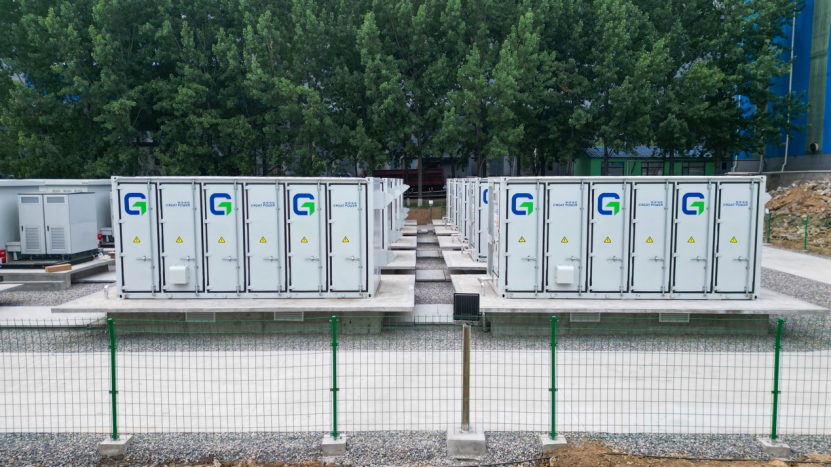
Matching Cell to Duration: A Selection Framework
The levers and the matrix point to a simple rule: match the cell's P-rate and cycle profile to the system's duration, then size capacity to the energy target. The table maps common use cases to the Ultra Series cell that fits.
| Use case | Typical duration | Cell profile | Ultra Series example |
| Frequency regulation, fast response | ~1 hour | High power, 1P, deep-cycle | 280 Ah @ 1P |
| Daily arbitrage, C&I peak shaving | ~2 hours | Balanced, 0.5P | 314 Ah @ 0.5P |
| Grid energy shifting, utility/residential | 2–4+ hours | High energy, 0.5P, high-cycle | 587–648 Ah @ 0.5P |
One caution: this table assumes LFP across the board, which is where these cells sit. Duration alone does not fix the choice. Grid codes, ambient temperature, and cycling frequency all shift it, which is why a cold-climate residential system may favor a low-temperature cell over a higher-capacity one at the same duration. The pattern still holds: short-duration work rewards power and deep cycling, longer-duration work rewards energy density and calendar life. Capacity is the dial you turn last.
As a rough example, a four-hour utility energy-shifting system is an energy build, not a power build: the 0.5P 587Ah cell fits because the duty never demands fast discharge, and its higher capacity keeps cell count and wiring down. Put a 1P power cell there instead, and you pay for discharge speed the application never uses.
When Lithium Isn't the Answer
Lithium iron phosphate is the right tool across most of today's market, but its economics have a ceiling. Below the threshold where long-duration storage formally begins, lithium dominates; above it, other technologies start to win on cost. Knowing where that line sits keeps a project from over-specifying lithium.
Where Does Lithium's Economics Run Out?
Lithium stays cost-effective for the short-to-medium durations that cover most grid, C&I, and residential needs, conventionally four hours or less. Interest is expanding that range, and the National Renewable Energy Laboratory notes growing deployment of storage beyond four hours of capacity. But formal long-duration storage begins at 8 hours per the LDES Council and 10 hours per the DOE. Around and beyond that band, lithium's cost per usable kilowatt-hour rises faster than the alternatives, because the system pays for power capability the duty no longer needs.
The Technologies That Compete Beyond 8 Hours
Once duration stretches into the multi-day and seasonal range, mechanical, thermal, and non-lithium electrochemical systems become competitive. The DOE and the LDES Council group long-duration technologies into chemical, electrochemical, thermal, and mechanical categories. Common examples include flow batteries, metal-air cells such as iron-air, compressed-air energy storage, and pumped hydro. These trade round-trip efficiency and energy density for very low cost per stored kilowatt-hour over long discharges, which is the opposite of what a lithium cell optimizes for.
Where each sits, roughly:
· Short-duration (SDES), ~1 to 4 hours: lithium iron phosphate
· Long-duration (LDES), 8+ hours to days or seasons: flow batteries, metal-air, compressed-air, pumped hydro, thermal storage
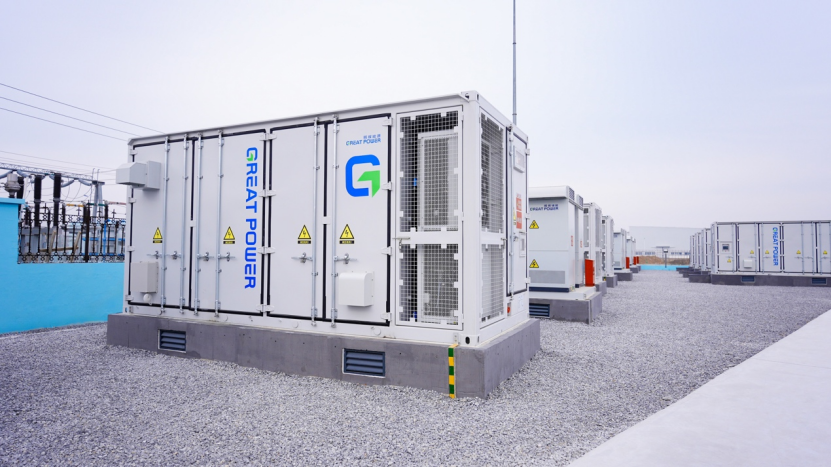
Why Great Power Spans the Full Duration Range
For the durations where lithium is the right answer, the practical question is whether one supplier can cover the whole spectrum without forcing compromises. Great Power builds its energy storage cells across that range, from the 1P power cell to the high-capacity 0.5P energy cell, which is what lets a project match the cell to the duty rather than the other way around.
A Portfolio Built Across the Duration Spectrum
Great Power is a BloombergNEF Tier 1 energy storage manufacturer, founded in 2001 and shipping to more than 50 countries. Its energy storage line spans cells, packs, racks, and containers, with residential storage cells ranking among the global top three by shipments. The same Ultra Series chemistry covers short-duration C&I cells and longer-duration utility cells, and the Max-20HC container shows the energy-cell end integrated at 6.25 MWh. You can compare the full range across Great Power's Ultra Series energy storage cells.
Where Great Power Fits, and Where It Doesn't
Great Power's strength is the LFP range that serves roughly 1-to-8-hour durations, not the multi-day chemistries above it. Two honest limits are worth naming. First, the highest-capacity Ultra cells (587Ah, 588Ah, 648Ah) currently list GB certification as in progress, while already holding UN38.3 and IEC62619. Second, for durations well beyond 8 hours, the right answer is usually a different technology class entirely, not a larger lithium cell. Inside its range, the portfolio is built to match duration directly.
The Bottom Line
Duration decides cell design before chemistry does. The same LFP family can serve a one-hour frequency-regulation duty or a four-hour energy shift, but only if capacity, C-rate, and cycle life are tuned to the hours the system must cover. Great Power's Ultra Series shows the pattern in one product line: a 1P power cell at one end, high-capacity 0.5P energy cells at the other, and a 6.25 MWh container proving the energy cell holds 95% efficiency at scale.
Match the cell to the duration first, then size the capacity. To see the full range, start with Great Power.
Sources
1. Energy Storage Solutions (product brochure). Guangzhou Great Power Energy & Technology Co., Ltd. March 2026. https://www.greatpower.net/en/
2. Long-Duration Energy Storage. U.S. Department of Energy, Office of Clean Energy Demonstrations. https://www.energy.gov/oced/long-duration-energy-storage
3. Long Duration Storage Shot fact sheet (DOE/EE-2384). U.S. Department of Energy. July 2021. https://www.energy.gov/sites/default/files/2021-07/Storage%20shot%20fact%20sheet_071321_%20final.pdf
4. LDES technologies and definition. Long Duration Energy Storage Council. 2026. https://ldescouncil.com/
5. Moving Beyond 4-Hour Li-Ion Batteries: Expanding Energy Storage Duration in U.S. Markets. National Renewable Energy Laboratory (NREL/TP-6A40-85878). 2023. https://docs.nrel.gov/docs/fy23osti/85878.pdf
6. Denholm, P., Cole, W., Frazier, A.W., Podkaminer, K. & Blair, N. The Challenge of Defining Long-Duration Energy Storage. National Renewable Energy Laboratory (NREL/TP-6A40-80583). 2021. https://docs.nrel.gov/docs/fy22osti/80583.pdf
 Consulting & Services
 Great Power