


 Date:2026.05.13
 Views: Loading


The cell that serves one will fail prematurely in the other.
The residential storage market has grown rapidly.
Behind-the-meter (BTM) battery storage reached approximately 20 GW of the ~108 GW total global battery storage additions in 2025, representing roughly 20% of new capacity [1]. In Europe alone, more than 4 million homes now have battery systems installed [2]. InfoLink reports global residential ESS shipments of 38.10 GWh in Q1–Q3 2025 alone, up 70.42% year over year [3].
Selecting the right cell means matching chemistry to three variables: climate, daily cycling depth, and safety requirements. Each variable eliminates options before price or brand are even considered.
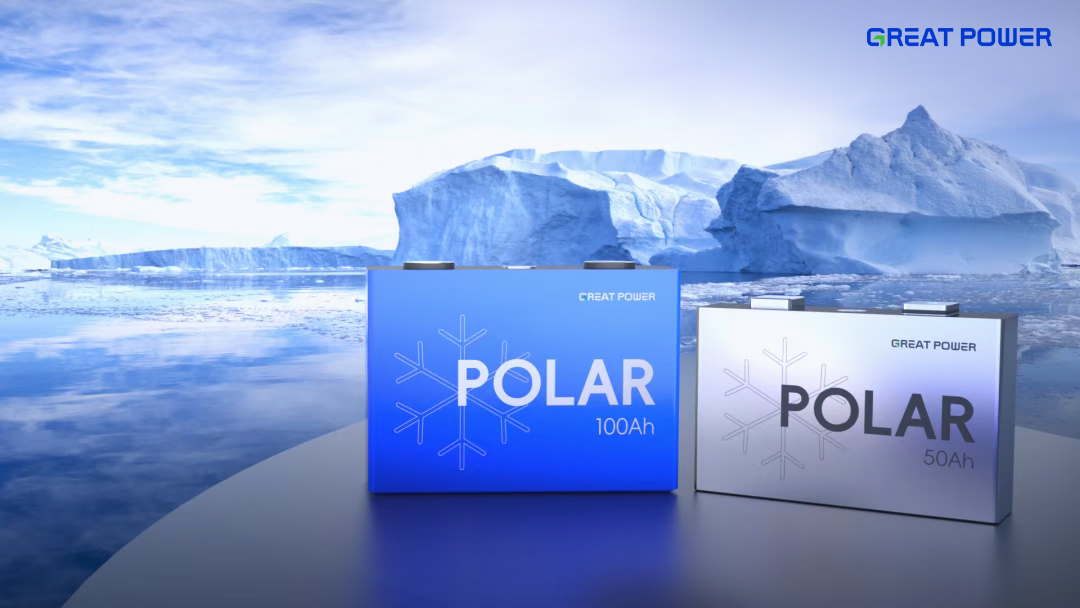
Core Selection Criteria — Four Variables That Determine Cell Performance
Every residential ESS cell type has distinct trade-offs. The following four criteria form the elimination sequence for any specification process.1. Operating Temperature — The First Eliminator
Temperature tolerance is the fastest way to narrow the list of viable home battery cell selection candidates.LFP (lithium iron phosphate) cells operate optimally between 15°C and 35°C. Below 0°C, charging without adequate heating can cause lithium plating — a permanent capacity loss mechanism that shortens cycle life [4].
Above 45°C, accelerated SEI (solid-electrolyte interphase) growth consumes active lithium, increasing internal resistance and reducing usable capacity over time.
For cold climates — Northern Europe, Canada, high-altitude regions — standard LFP cells require external heating systems. These add hardware cost, control complexity, and parasitic energy draw. Some specialized cells, such as the POLAR low temperature battery, eliminate this requirement entirely.
For hot climates — the Middle East, Southeast Asia, Australia — ambient temperatures of 40°C+ push standard cells toward accelerated degradation. Cells rated for 55°C or 60°C continuous operation are preferable in these markets.
2. Cycle Life — What "7,000 Cycles" Actually Means
A 7000 cycle life battery cell sounds like a 20-year product. In practice, cycle life depends on operating temperature, depth of discharge (DoD), charge rate, and how the datasheet defines "end of life."The industry standard test: 6,000 cycles at 25°C, 80% DoD, 0.5C charge-discharge. Under real-world conditions, the number moves. At 45°C, degradation rate can double, effectively halving cycle life [5]. At 100% DoD on every cycle, cycle count drops to roughly 60% of the 80% DoD rating.
When comparing LFP home energy storage options, ask for cycle life data at your specific operating temperature and DoD profile. A cell delivering 7,000 cycles at 25°C may deliver only 3,500 cycles at 40°C with daily full-depth cycling. The headline number without context is not a specification — it is a marketing figure.
3. Safety — LFP's Structural Advantage
LFP chemistry offers a structural safety advantage over nickel-manganese-cobalt (NMC) that translates into measurable test results.LFP thermal runaway initiation temperature is approximately 230°C, compared to approximately 180°C for NMC [6]. The olivine crystal structure of LFP does not release oxygen during decomposition, eliminating the secondary combustion risk that drives explosion hazards in other chemistries.
UL 9540A, the standard for thermal runaway fire propagation testing, was updated to its 5th edition in 2025. The new edition introduced the Thermal Runaway Propagation Threshold (TRPT) concept and mandates worst-case cell position testing [6]. For residential installations, Level 3 (unit-level) UL 9540A testing is the minimum requirement.
4. Form Factor — Prismatic, Cylindrical, or Pouch?
Residential ESS cell types generally fall into three form factors:· Prismatic: Highest energy density per footprint. Dominates wall-mounted residential systems. Best for space-constrained installations.
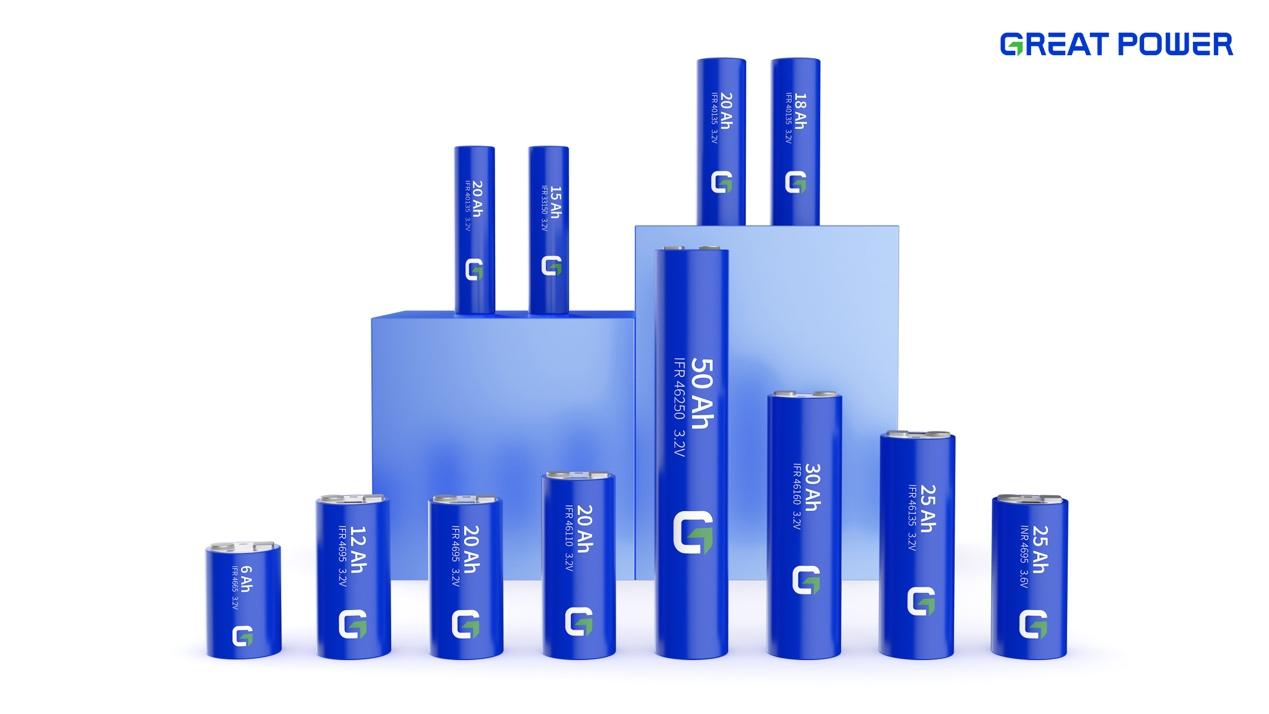
· Large cylindrical: Higher surface area to volume ratio compared to prismatic cells of equivalent capacity, aiding heat dissipation. No swelling risk. Easier to stack in modular configurations. Growing adoption in residential systems where safety is the primary concern.
· Pouch: Lightweight and customizable. Good thermal performance. Suitable for integrators who need flexible pack shapes.
Form factor affects system design more than cell performance, but it impacts safety (cylindrical cells cannot swell), cost (prismatic cells use space efficiently), and integration flexibility (pouch cells adapt to custom dimensions).
Great Power's Residential Energy Storage Cell Portfolio — Four Products for Four Scenarios
Great Power offers four distinct residential energy storage cell products, each designed for a specific operating envelope.| Product | Temperature Range | Cycle Life | Best For | Form Factor |
| POLAR | -30°C to 60°C | 5,000+ | Cold/extreme climates | Prismatic |
| 100Ah Long-Cycle | -10°C to 60°C | 7,000+ | Daily cycling, VPP programs | Prismatic |
| HOME Large Cylindrical | -10°C to 55°C | 6,000+ | Indoor/garage, safety-first | Cylindrical |
| Pouch | -10°C to 65°C | 4,000+ | Custom integration | Pouch |
Designed for Nordic, Canadian, and high-altitude markets where external heating systems would otherwise be required. Great Power ranked among the InfoLink Global Top 3 residential ESS cell suppliers and holds BNEF Tier 1 status for seven consecutive quarters (Q1 2026) [7].
100Ah Long-Cycle — Rated for 7,000+ cycles at 80% DoD. Suitable for daily solar self-consumption and virtual power plant (VPP) programs where the battery cycles once or more per day. At one full cycle per day, 7,000 cycles represents approximately 19 years of service. Available in a prismatic format optimized for wall-mounted residential systems.
HOME Large Cylindrical — Protected by 30+ core patents. The cylindrical form factor provides enhanced heat dissipation and eliminates swelling risk. Suitable for indoor installations — garages, basements, and living spaces where absolute safety is the priority.
Pouch — Flexible dimensions for custom pack design. Rated to 65°C continuous operation, suitable for hot-climate installations and integrators who need non-standard form factors.
Certifications — The Paperwork That Protects Your Investment
Certifications verify that a residential energy storage cell meets independent safety and performance standards. The relevant ones are:· UL 9540A: Thermal runaway characterization. Ask suppliers for Level 3 (unit-level) test reports. The 2025 5th edition added TRPT and mandatory worst-case testing [6].
· UL 1973: Safety standard for stationary battery energy storage systems.
· IEC 62619: International safety standard for industrial lithium cells.
· UN 38.3: Mandatory transport certification for lithium cells.
· EU Battery Regulation 2027: New requirements for carbon footprint declaration and minimum recycled content.
Verify that certifications are current (not expired) and cover the exact cell model under consideration. A certification for a similar product is not a certification for your product.
Quick Decision Framework
The following decision tree covers the most common home battery cell selection scenarios:· Sustained -20°C or below → POLAR series. Low-temperature charging without external heating. LTSC technology enables operation where standard LFP cells require auxiliary systems.
· Maximum daily cycle count required (VPP, time-of-use arbitrage) → 100Ah Long-Cycle. 7,000+ cycles at 80% DoD keeps per-cycle cost minimal. Approximately 19 years of daily cycling before reaching end of life.
· Indoor installation in living spaces → HOME Large Cylindrical. No swelling risk. Provides inherently safer heat dissipation through cylindrical geometry. Patent-protected design for residential safety.
· Custom pack dimensions or high-temperature operation (65°C) → Pouch cells. Flexible sizing for integrators. Highest continuous temperature rating in the portfolio.
Conclusion — Start With the Cell
The cell determines the system. Chemistry choice cascades into operating temperature range, cycle life, safety profile, certification requirements, warranty terms, and total cost of ownership.Three questions to ask any residential ESS cell supplier:
1. "Show me cycle life data at my operating temperature and DoD." A 7,000-cycle claim at 25°C and 80% DoD does not predict performance at 40°C and 100% DoD.
2. "Show me UL 9540A Level 3 test results for this specific cell model." Generic chemistry-level data is not sufficient for system-level safety design.
3. "What is your minimum order quantity and lead time?" Supply chain constraints affect project timelines regardless of cell performance.
Great Power supplies residential energy storage cells to more than 50 countries with a zero-incident safety record since entering ESS in 2011. For datasheets and application engineering support, visit www.greatpower.net/en/.
References
[1] IEA, Global Energy Review 2026. International Energy Agency, 2026. — 108 GW total global battery storage additions in 2025, +40% YoY; BTM ~20% of new capacity; LFP ~90% market share.[2] SolarPower Europe, European Market Outlook for Battery Storage 2026–2030. 2026. — 4 million European homes with batteries; EU added 27.1 GWh total storage in 2025, residential 9.8 GWh.
[3] InfoLink Consulting, Global Residential ESS Cell Shipment Report, Q1–Q3 2025. — 38.10 GWh shipments, 70.42% YoY growth; Great Power ranked Global Top 3 residential ESS cell supplier.
[4] Yang et al., "Study on Influencing Factors of Calendar Aging and Cycle Aging of LFP Batteries," Applied Sciences, vol. 15, no. 23, 2025.
[5] Gowda et al., "Life Cycle Testing and Reliability Analysis of Prismatic Lithium-Iron-Phosphate Cells," International Journal of Sustainable Energy, vol. 43, no. 1, 2024.
[6] UL 9540A, 5th Edition, 2025. — LFP thermal runaway trigger ~230°C; added TRPT concept; mandatory worst-case cell position testing.
[7] BloombergNEF, 1H 2026 Energy Storage Market Outlook. — 112 GW / 307 GWh in 2025; forecast 158 GW / 459 GWh for 2026.
 Consulting & Services
 Great Power